Why motherhood leaves so many women depleted
Motherhood is often described as exhausting. But what many women experience goes far beyond tiredness. There is a kind of depletion that accumulates over time when the giving becomes constant and recovery never quite arrives.
I have been a mother for 21 years, and depletion has been part of that journey in ways I rarely hear spoken about openly.
Depletion is not just being tired
The depletion I’m speaking about is deeper than lack of sleep.
It shows up as numbness, irritability, insomnia, chronic tension, isolation and the strange feeling of running on empty while still functioning.
Many mothers carry this in silence because our culture expects women to keep juggling everything.
Curiosity instead of judgement
There is a quote I return to often:
“The strongest force on earth isn’t gravity. It’s curiosity.”
When we approach depletion with curiosity instead of judgement, the question changes.
Instead of asking what’s wrong with me? we begin asking:
What is my body asking for?
A moment that changed how I mothered
When my first child was a baby I was raising him alone while studying and working two jobs.
Every evening I came home exhausted but forced myself to keep going... making dinner, studying, trying to be present.
Until one evening I simply let myself slide to the floor against the radiator and fell asleep for twenty minutes while my son played beside me.
That small act of listening to my body became a life-saving ritual.
Sometimes the medicine is simply allowing the body what it is asking for.
Herbal allies for depleted mothers
As a herbalist, I want to speak about herbal allies now.
You know how much herbs are entities for me. They are not simply substances that you consume. They are companions that you form a relationship with.
So I’m not going to speak here in terms of instructions or prescriptions. I want to speak in terms of relationship.
Often when we are depleted, certain plants seem to find us rather than the other way around.
If you think about it, we are often drawn to scents that comfort us. It might be a cream we put on our skin. A tea we like to drink. A spice whose taste we love. Or even something in the air as we walk outside — something we cannot always name but instantly recognise in the body.
This is very much my approach to herbal medicine.
Your body knows intuitively what it requires.
My role as a herbalist is to help remove the barriers to listening and to offer herbs that are full of vitality, grown on soil that is not depleted itself.
Because if you want to help a depleted body, the herbs themselves must carry vitality.
If one of them speaks to you, you can explore it further.
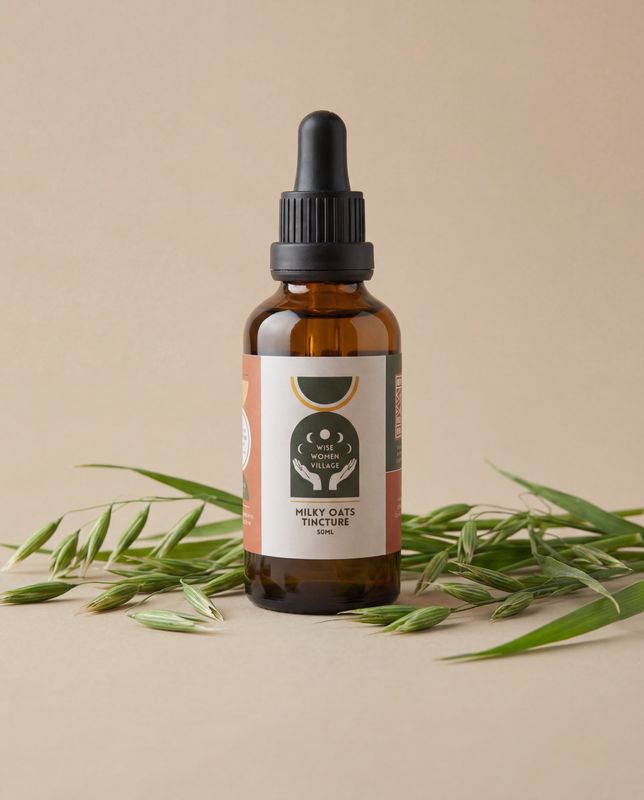
Milky Oats
Milky Oats, of course. I would not be the person I am today without Milky Oats.
But the question is not just what Milky Oats are. It’s also who they are.
For me this is a masculine plant with a deep reverence for the feminine. I often think of it as a brother to Hops.
Milky Oats contain a medicinal latex at the milky stage, before the oat matures into food. And I experience that latex as something that enters all the cracks of the nervous system, repairing, nourishing and feeding you until you return to yourself.
This is not a fast herb.
We are talking about consistency over time - often twelve weeks or more - before the deeper effects reveal themselves. But once they do, the resilience they build can feel extraordinary.
For me Milky Oats are the plant equivalent of royal jelly.
For those familiar with apitherapy, royal jelly is the substance secreted by young bees to feed the queen bee throughout her life, giving her fertility and extraordinary longevity.
Milky Oats carry that same sense of special treatment and deep nourishment.
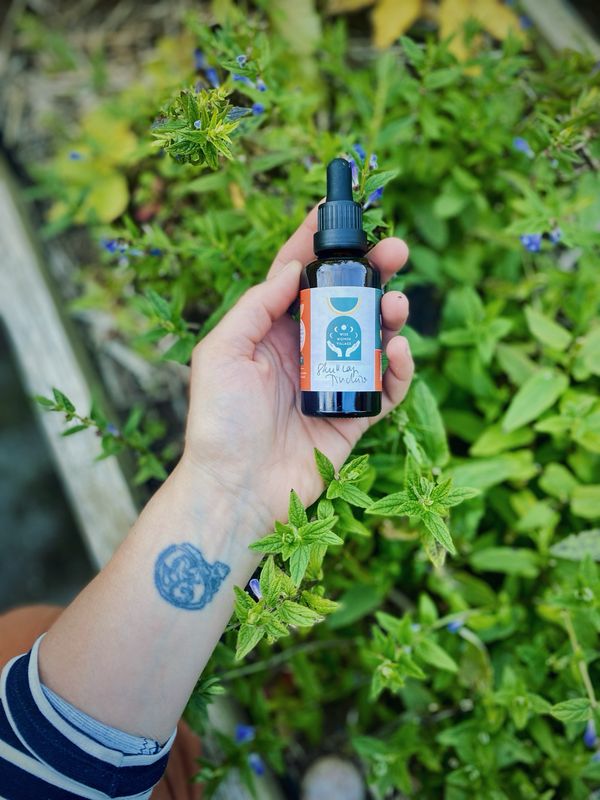
Skullcap
Skullcap feels completely different.
Where Milky Oats feels singular, Skullcap feels like a team.
A team of highly organised, fairy-like creatures with little hats who arrive when things feel too much.
They scaffold the mind and the nervous system when you need it most.
Because Skullcap spreads so abundantly, I often imagine these little beings matching the intensity of your overwhelm, meeting it with equal presence until calm is restored.
And then, almost as quickly as they arrived, they disappear again.
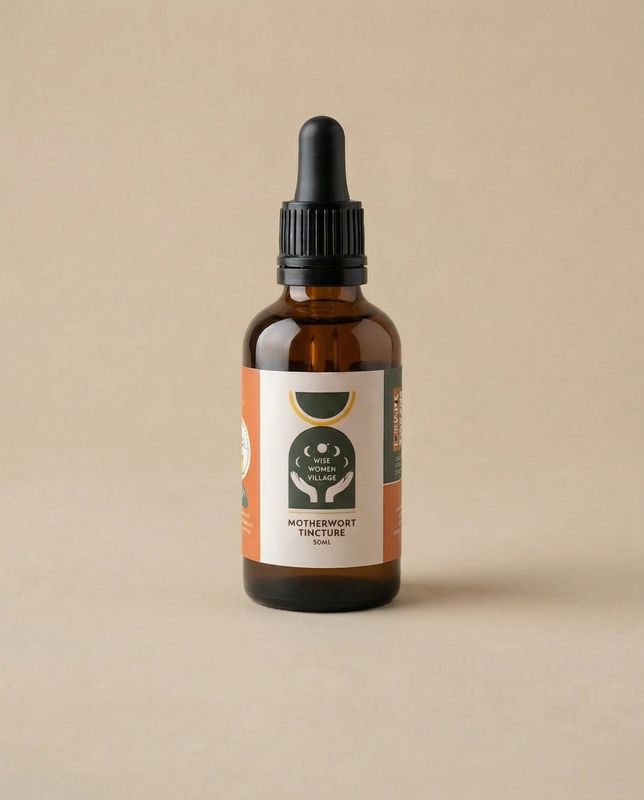
Motherwort
Motherwort is an herb I have leaned on heavily in the later years of motherhood.
I still have a fourteen-year-old and a four-year-old at home, and that age gap can be… intense.
For me Motherwort is the elder.
A wise woman with weather-beaten skin and piercing eyes. Warm, compassionate, deeply experienced, but not afraid to call out your nonsense.
Her words may sting a little, but never to wound. Only to help you grow.
Motherwort is one of those plants that restores balance by reminding you of what truly matters.
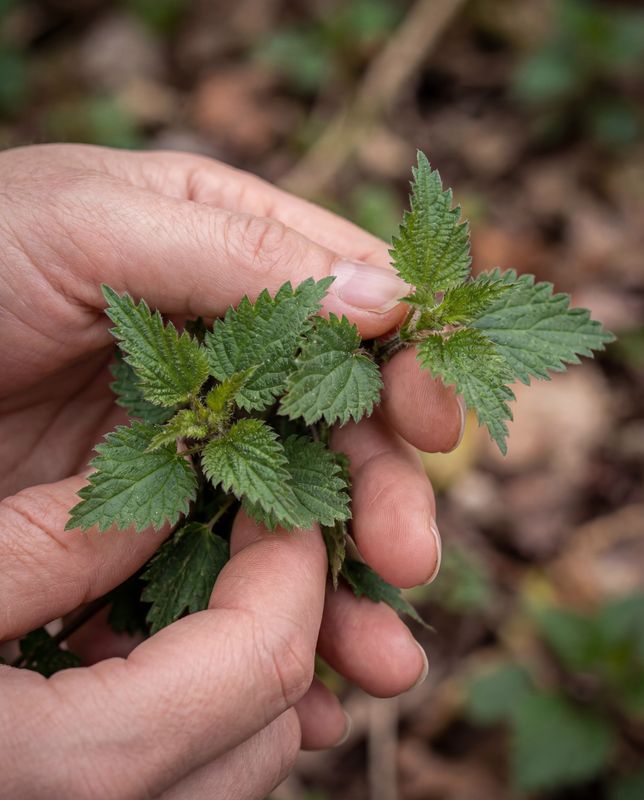
Nettle
Nettle is one of the core herbs of motherhood.
From conception through the rest of life, Nettle has a place.
For me Nettle carries a very masculine energy: straightforward, grounded, practical.
It’s an actions-over-words kind of plant.
If you have ever been stung by Nettle, you know how it awakens circulation instantly. That enlivening quality is part of its medicine.
Nettle rebuilds from the ground up.
Slowly. Consistently. Without fuss.
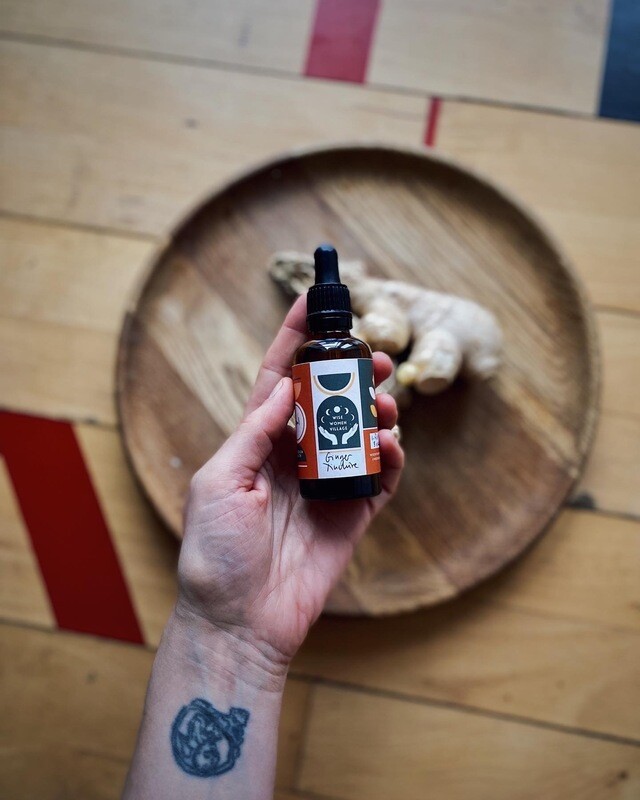
Ginger
Ginger is not native to Scotland, but it belongs here in this conversation.
To me Ginger is quiet but powerful.
It is the ground you thought had disappeared beneath your feet, a hidden treasure chest you discover when you thought all hope was gone.
Ginger carries warmth through the body incredibly quickly. It moves circulation. It wakes up digestion.
Depleted bodies often need warmth before anything else.
Warmth, movement and digestion.
And Ginger delivers that beautifully.
Oatstraw
Oatstraw comes from the same plant as Milky Oats but carries a different quality.
More feminine. Softer.
Despite its rough appearance once dried, Oatstraw is incredibly silky. For me it feels like the bed your body needs for deep rest.
It is also gently cleansing, not in a stripping way, but in a way that allows nutrients and minerals to enter the body cleanly.
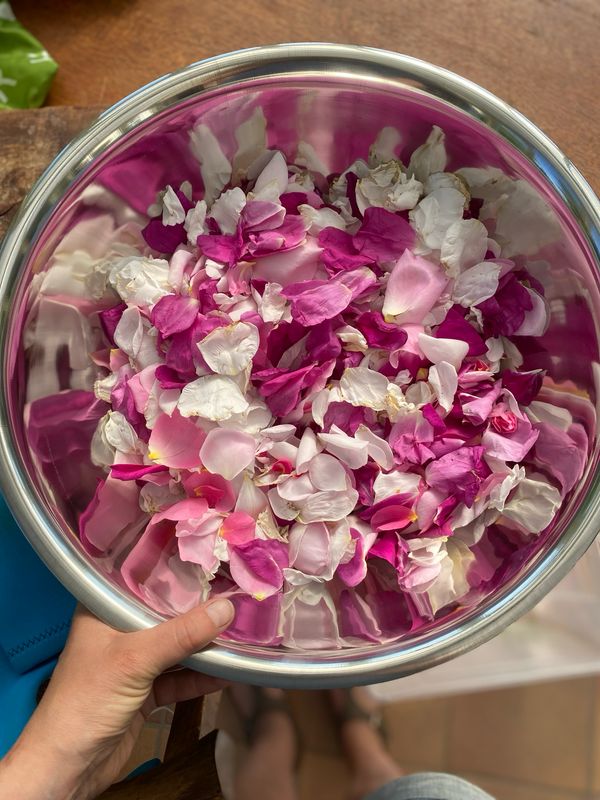
Rose
Rose tends to appear when hardship has already taken its toll.
It is rarely the first herb people reach for. More often it arrives when the body needs to be hugged from the inside.
If you really look at a rose, the medicine is obvious.
A tender, open heart.
And thorns.
Rose teaches us that we can remain open and soft while still protecting ourselves with strong boundaries.
That lesson alone is profound medicine.
Herbs do not replace support, but they can accompany us while we rebuild.
Rhythm over rescue
In my experience, rhythm restores mothers more than almost anything else.
Regular meals, daylight, outdoor time and sleep create predictability - and predictability is one of the greatest nervous system soothers we have.
Supplements can help.
But rhythm is what truly changes things.
Depletion is not failure
If you are a mother feeling depleted, I want to say this clearly:
Depletion is not a failure of motherhood.
It is information.
Your body asking for something.
Sometimes that something is rest.
Sometimes rhythm.
Sometimes nourishment.
And sometimes the quiet companionship of a plant that understands exactly where you are.
Refine by
Display prices in:GBP